Honoring Our Roots, Renewing Our Mission: Why We Are Becoming the SoHi Center
By Don Yu, Executive Director
When my father founded the Korean Community Development Services Center (KCDSC) in Philadelphia in December 1983, he did so with a simple belief — those who lead privileged lives have an obligation to help provide opportunities to those who do not.
For over four decades, KCDSC has served newly arrived immigrants who needed just a little bit of help. KCDSC initially began supporting newly arrived Korean immigrants living in Upper North Philadelphia; however, as the faces of our community have shifted over the years, KCDSC has served thousands of low-income Black, Latino, and Southeast Asian clients. Today, over half of our immigration clients are Haitian-Americans, and we have 90 active immigration cases. We also offer affordable housing to nearly 60 low-income families, provide affordable early childhood services to 70 students, and provide free benefit enrollment services for nearly a hundred clients annually.
As we look to meet the unprecedented challenges facing our immigrant and low-income neighbors today, we are officially renaming our organization the SoHi Center for Immigration & Community Development.
A Name Rooted in a Family’s History
The SoHi Center’s name is rooted in my parents’ story as new immigrants. You can read more about my Dad’s story as a first-generation immigrant who fulfilled the American Dream here.
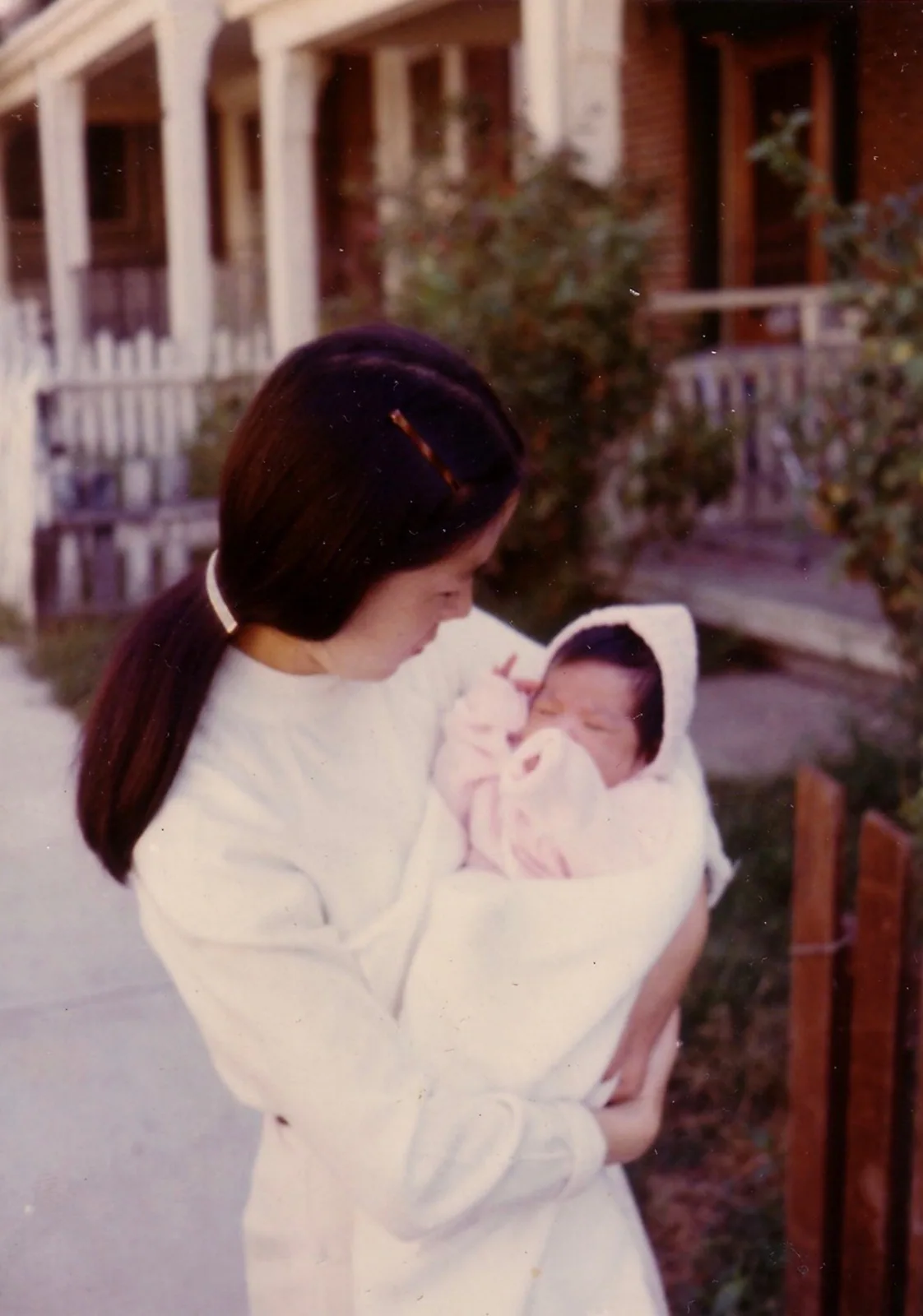
The SoHi Center (pronounced “So Hee”) honors my late mother, So Hi Yu. In Korean, “So Hi” means “bright joy.” Born in Seoul, South Korea in December of 1943, So Hi Yoon was the third child of seven born to my maternal grandparents.
Her childhood was marked by profound upheavals caused by the Korean War. Her parents — from a prominent and wealthy family in Seoul — lost a vast majority of their wealth (i.e., their land) following the passage of the Land Reform Act of 1949. Passed before the Korean War began in an effort to stave off communism, the Land Reform Act stripped elite families, including So Hi’s family, of their land to win the loyalty of rural tenant farmers.
When the war began in June 1950, wealthy and educated Korean families faced immediate political and social danger. Under North Korean occupation, the military and wartime government targeted the former aristocracy as “class enemies,” leading to further confiscations of land stripping whatever remaining wealth they had. Stunned by war and sudden loss of wealth, my grandparents fled Seoul for the countryside in 1950 and raised their children in a “bahm-di” or a rural village.
After the War, when South Korea began its transformation from an agrarian economy to a highly industrialized one, So Hi chose to attend the National Medical Center in Seoul, an institution established in 1958. Jointly operated by South Korea, the UN, and the Scandinavian medical missions of Sweden, Denmark, and Norway, the National Medical Center offered tuition-free training and board to help rebuild the country’s healthcare workforce.
Her decision to enroll at the Medical Center changed her life. In order to provide medical students with advanced clinical training, high-performing Korean doctors and nurses were sent directly to hospitals in Europe and the U.S. through foreign exchange programs.
Drawn to a nursing exchange program located at Albert Einstein Medical Center in Philadelphia, So Hi arrived in the U.S. in 1968. Shortly afterwards, she was introduced to my father, Jin Hung Yu, by a mutual friend. They married in 1969, and had their first child, Deborah, in August 1970. Her older sister, Kyung Sook, and her young family moved to Philadelphia in 1972 so she could be closer to her sister.
So Hi passed away suddenly on September 9, 1975, ten days after I was born. Her sudden passing dramatically reshaped our family’s story. At the time, my Dad was a real estate agent, but he ended up channeling his grief into building the Korean Community Development Services Center, a nonprofit that has served thousands of low-income Philadelphians over the past 40 years.
By renaming the Center in So Hi’s honor, we ensure that her legacy lives on through every family we house, every child we educate, and every immigrant we help keep safe. Through my father’s work, we know that she didn’t die in vain.
My parents are a tribute to all of the mothers and fathers who sacrifice everything so that the next generation might have a better life here in the U.S.
Renewed Purpose for the Road Ahead
As the SoHi Center, our commitment to Upper North Philadelphia is stronger than ever. Whether we are assisting the growing number of first-generation families navigating the U.S. immigration system, keeping housing affordable, or nurturing children at our PreK school, we carry forward the same spirit that inspired my father when he first opened our nonprofit’s doors in 1983.
Names matter because they tell a story about who we are, where we come from, and where we’re headed. By embracing the SoHi Center, we are anchoring our organization firmly in our history while recommitting ourselves to the work still ahead.
Thank you to our staff, our partners, our volunteers, and the incredible community members who have walked through our doors over the past forty-two years!